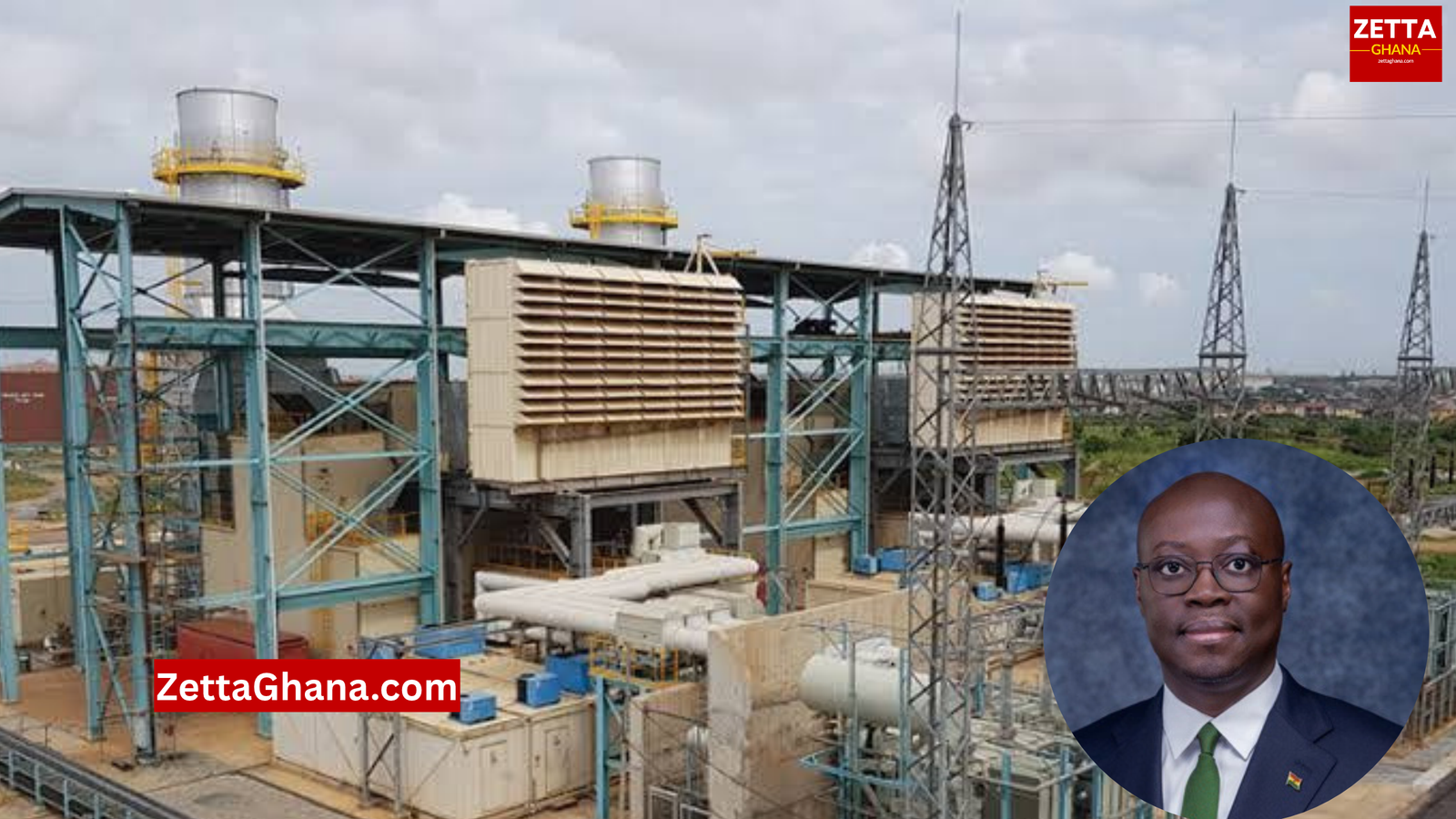
The government plans to build a 1,450-megawatt thermal power plant and a 600MW solar facility as part of efforts to increase electricity supply and end its reliance on expensive emergency power arrangements.
Finance Minister Dr Cassiel Ato Forson announced the projects during an interview on JoyNews’ PM Express on Thursday, November 12, 2026, saying both facilities would be fully owned by the state.
The thermal plant will be located at Ekafudzidzi in the Central Region, with construction expected to begin in December 2026. Dr Forson said the government intended to finance the project without borrowing.
The facility will be developed in two phases, with the first 600MW expected to come on stream by the fourth quarter of 2028. The remaining 850MW is scheduled for completion by the third quarter of 2030.
“When we have that, it will mean that, by that time, we can phase out what we call emergency power. Aside from that, we want to also diversify our power needs,” he said.
The plant will require about 150 million standard cubic feet of natural gas daily to operate at full capacity, with supplies expected from the Sankofa and Jubilee fields.
The government is also planning a 600MW solar facility supported by a battery storage system with a capacity of 2,000 megawatt-hours. The system will store excess electricity generated during the day for use during periods of high demand, while helping to stabilise the national grid.
Dr Forson said the additional capacity would provide the reliable and affordable electricity needed to support industrial activities, including bauxite and manganese processing, steel production, cement manufacturing and agro-processing.
“Energy capacity is economic capacity. It powers growth, jobs, and prosperity,” he said.
The government is targeting December 2030 to end the use of all emergency power plants, with the new facilities expected to reduce the need for temporary generation.
Beyond generation, it plans to invest US$500 million between 2027 and 2030 to upgrade the transmission network and reduce electricity losses.
The investment will cover improvements to the north-south transmission corridor, connections between power plants and major consumption centres, and infrastructure for electricity trade with neighbouring countries. It will also support power supply to strategic industrial zones.
On distribution, Dr Forson announced plans to install two million prepaid meters to improve revenue collection and reduce losses.
The government is also targeting the full implementation of performance-based private sector participation in electricity distribution by the end of 2027.
The measures form part of efforts to strengthen the power sector and provide the electricity supply needed to support industrial expansion and the government's 24-hour economy initiative.