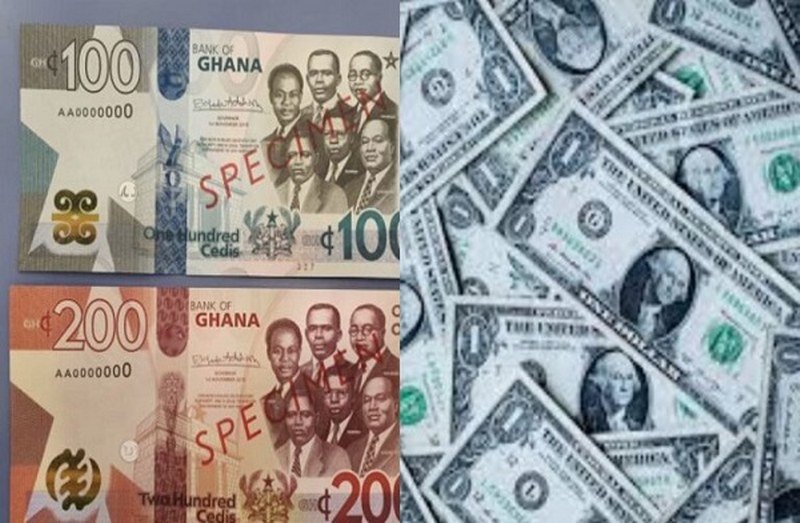
The Ghana cedi has recorded a 10.6 per cent depreciation against the US dollar in November 2026, highlighting renewed pressure on the local currency amid concerns over foreign exchange supply.
The latest Summary of Economic and Financial Data from the Bank of Ghana (BoG) shows that the cedi traded at GH¢11.69 to the dollar in November, compared with GH¢11.66 in September.
The local currency also weakened against other major international currencies, recording a 9.2 per cent depreciation against the British pound and 5 per cent against the euro on the interbank market.
It traded at GH¢15.47 to the pound and GH¢12.92 to the euro during the period.
The currency's performance comes after a year of fluctuations, with periods of depreciation interrupted by occasional recoveries, partly supported by foreign exchange interventions by the central bank.
The outlook for 2027 also suggests further challenges. Fitch Solutions projects that the cedi will average GH¢12.40 to the US dollar next year.
Associate Director at Fitch Solutions, Mike Kruiniger, attributed the projected pressure partly to the possibility of lower international gold prices and government efforts to rebuild foreign exchange reserves.
He said changes in foreign exchange intermediation, including the shift from the Bank of Ghana to the Ghana Gold Board, could also affect the supply of dollars on the domestic market.
Mr Kruiniger warned that these developments could put additional pressure on the currency and trigger price increases.
A weaker cedi could raise the cost of imported goods and industrial raw materials, potentially adding to inflationary pressures and increasing operating costs for businesses.