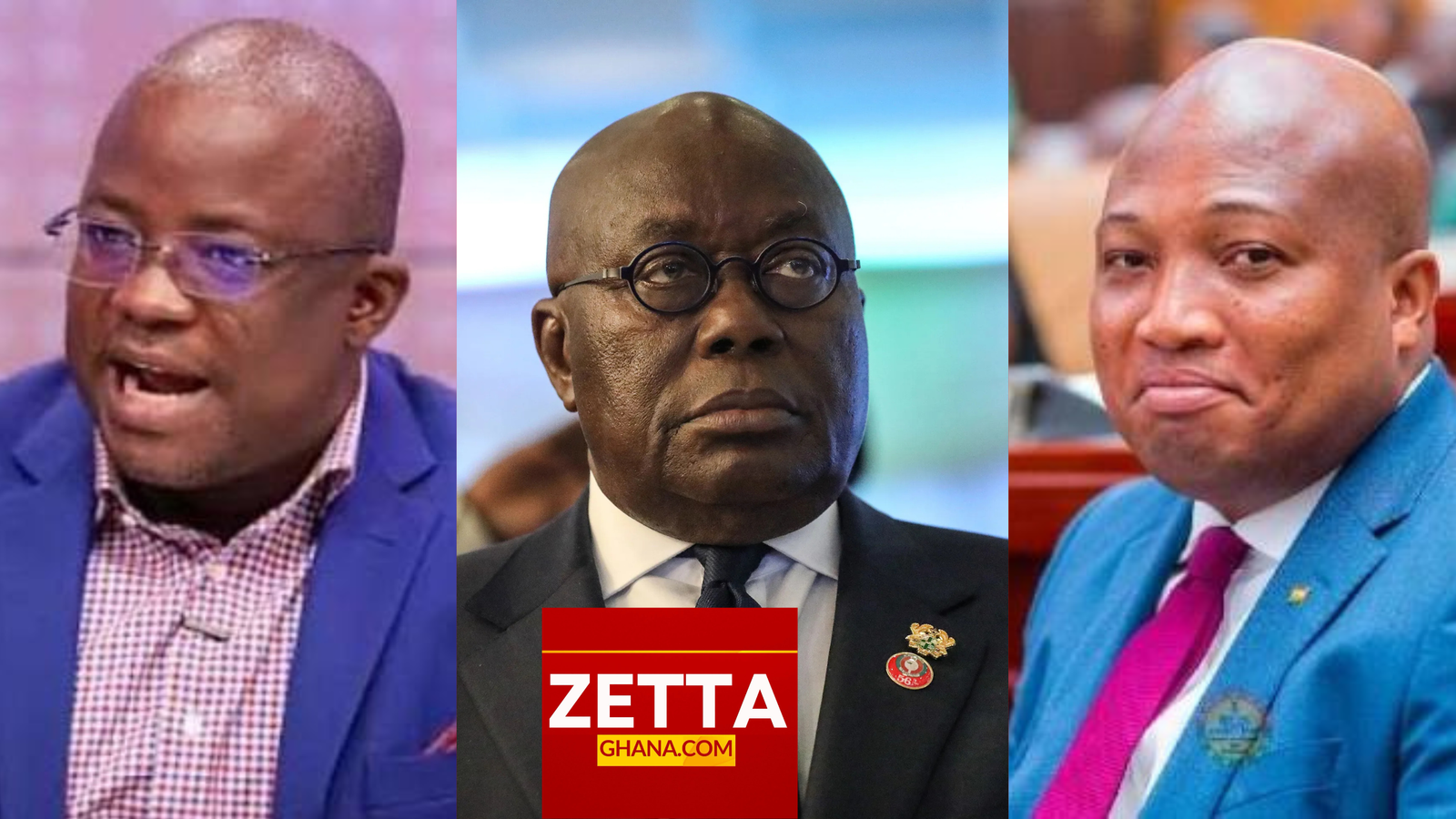
A member of the National Democratic Congress (NDC) Communication Team, Justice Yeboah, has taken a swipe at the opposition New Patriotic Party (NPP), using Malaysia’s economic development as a reference point to criticise the party’s political record in Ghana.
Justice Yeboah made the remark while commenting on comparisons between Ghana and Malaysia, particularly regarding their respective levels of development despite Ghana attaining independence earlier.
According to him, some Ghanaians often question why Malaysia has become more developed than Ghana, even though Ghana gained independence before the Southeast Asian country.
He suggested that the political leadership of the two countries provides a simple explanation for the difference, pointing out that Malaysia does not have the NPP as a political party.
“Sometimes, I hear people saying Ghana attained independence before Malaysia, yet Malaysia is more developed than Ghana, and they don't understand why. My simple answer to them is this: Are they not aware that there is no NPP in Malaysia?” he stated.
The comment appears to be a political jab at the NPP, suggesting that the party's governance and policy decisions have contributed to Ghana's development challenges.
His remarks have also brought renewed attention to the long-standing debate about Ghana's economic progress compared with countries that gained independence around the same period.
Ghana became independent from British colonial rule on March 6, 1957, while Malaysia gained independence from Britain on August 31, 1957. Despite the relatively short gap between their independence dates, the two countries have followed different economic and development paths.
While Malaysia has developed a strong manufacturing and export-oriented economy, Ghana continues to grapple with challenges relating to industrialisation, employment, economic stability and infrastructure development.
Justice Yeboah's statement adds to the ongoing political exchanges between the NDC and NPP over which party has the better record of managing the country's economy and advancing national development.
The debate surrounding Ghana's development trajectory continues to attract political commentary, with questions frequently raised about the country's ability to translate its early independence into sustained economic progress.
According to the World Bank, Malaysia's transformation has been driven largely by deliberate economic policies, investments in human capital, export-oriented growth and the expansion of its manufacturing and services sectors.
It is worth noting that the Federation of Malaya gained independence on August 31, 1957, while the modern Malaysian federation was established on September 16, 1963. Ghana became independent on March 6, 1957.
Justice Yeboah's comment therefore adds a political dimension to the broader discussion about the factors responsible for the development gap between the two countries.
His comparison is likely to fuel further exchanges between supporters of the NDC and NPP, particularly as both political parties continue to defend their respective records and present their visions for Ghana's economic future.