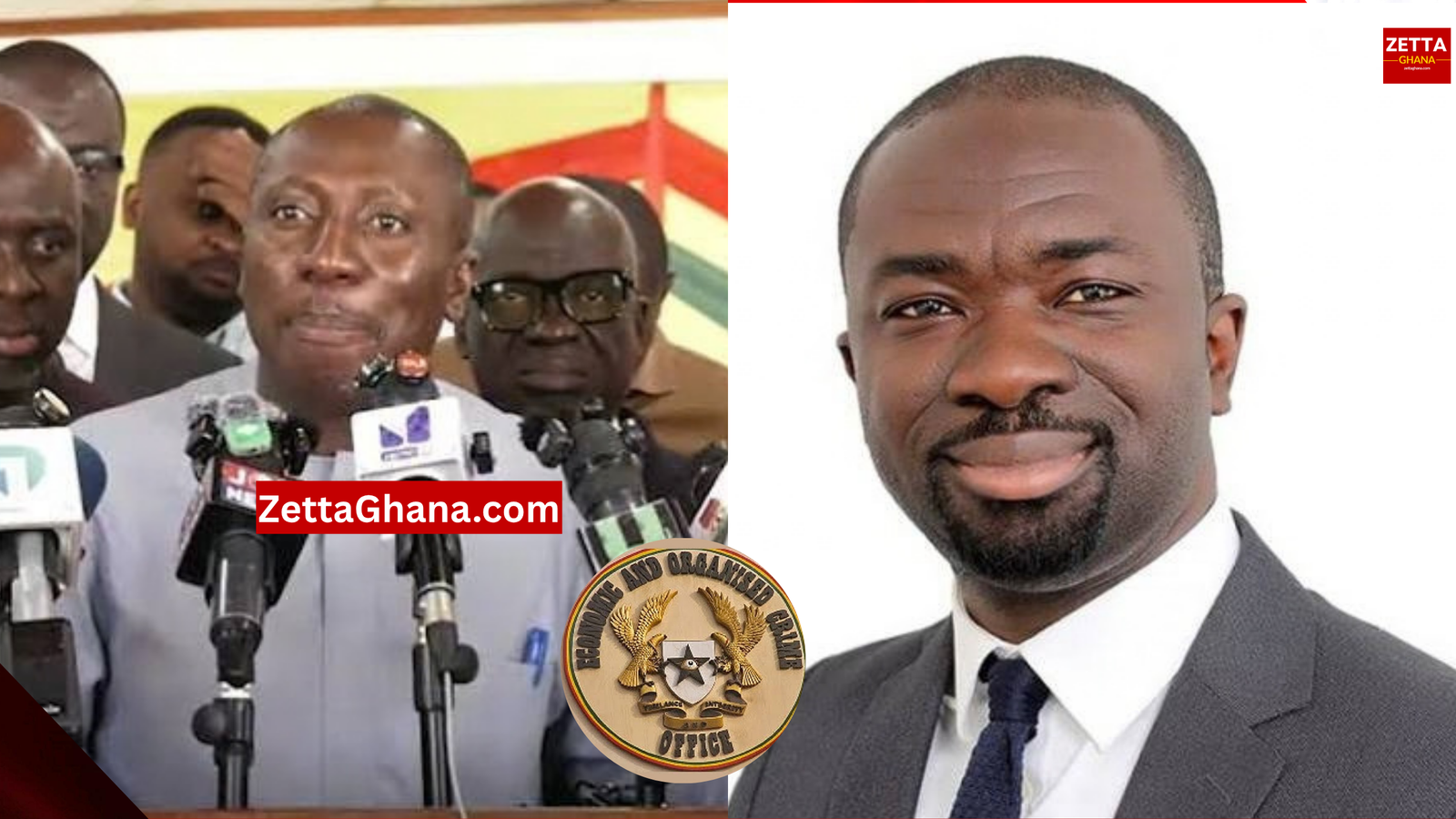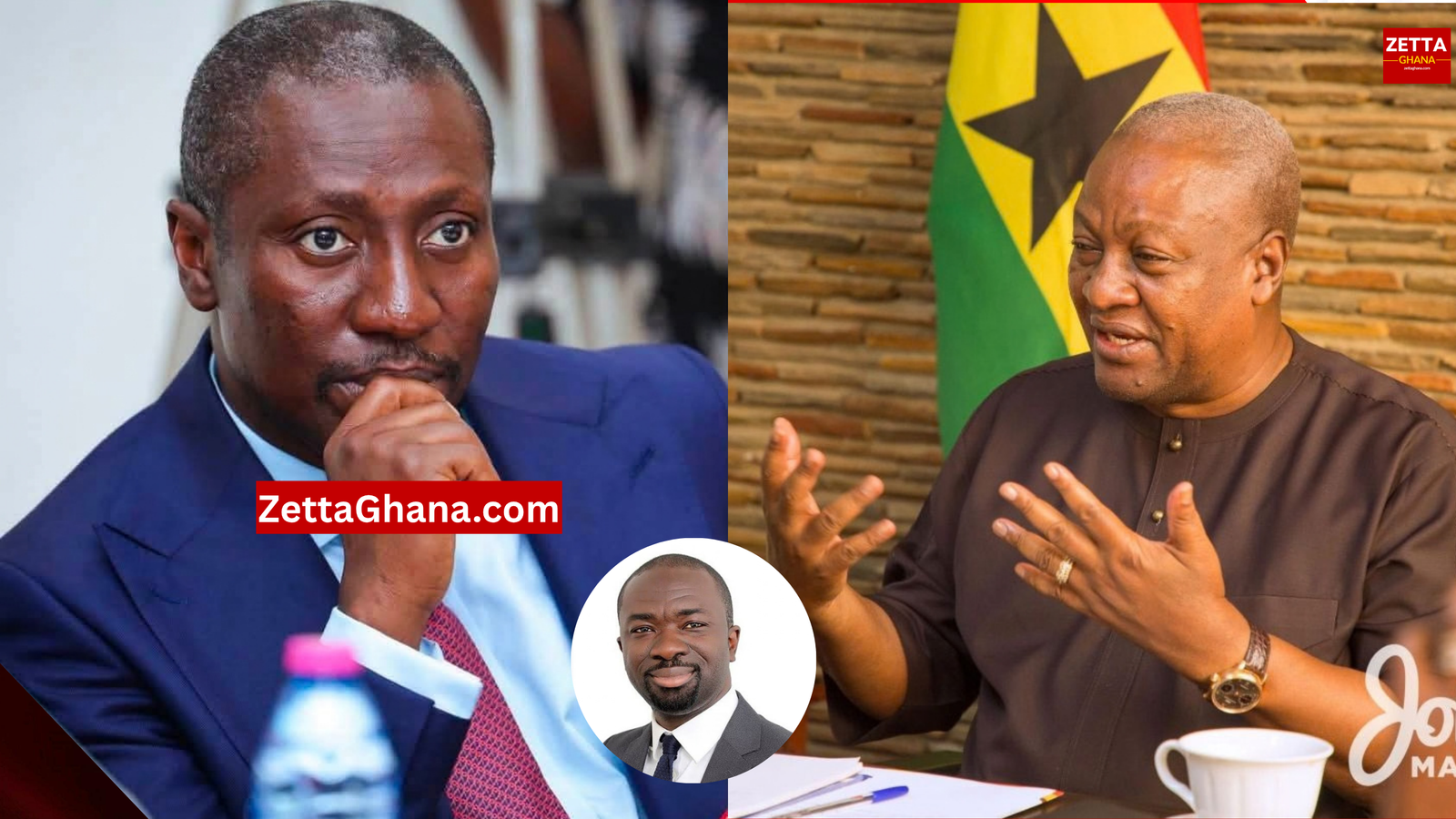
The Minority in Parliament has urged President John Dramani Mahama to call his appointees to order following the reported attempt by officials of the Economic and Organised Crime Office (EOCO) to arrest Manhyia South MP Nana Agyei Baffour Awuah.
The incident reportedly occurred on Wednesday, September 23, 2026, when Baffour Awuah, who is also a lawyer, was at the Accra High Court to represent social commentator Salomey Baffoe in her bail application.
Baffoe is facing allegations of abetting the publication of false information in connection with content associated with the “Ghana Jollof” TikTok account.
According to reports, persons identified as EOCO officials approached Baffour Awuah at the court and sought to take him into custody.
However, the situation later escalated outside the court, where a scuffle broke out between Baffour Awuah and the EOCO official as he tried to leave in his vehicle.
Addressing a press conference in Parliament, Minority Leader Alexander Afenyo-Markin criticised what he described as excesses by state institutions and urged President Mahama to ensure that his appointees act within the law.
“Watch these excesses; enough is enough. Call your appointees to order because this is not the Ghana we want. We are not against accountability, and we always say that. We are not against any state institution going about its lawful duty as enshrined in any enactment or the Constitution. What we are saying is that a state institution must be seen to be doing its work lawfully,” he said.
Afenyo-Markin also urged the President to consider how his administration would be remembered, particularly as he approaches the end of his second term.
“Mr President, reflect on your legacy. You are left with almost just 2 years from exiting office. The question is, what would you tell Ghanaians when you are in your quiet moment? Can you proudly say, in the second opportunity you were given by God, you used that chance to transform your country?” he asked.
He stressed that the Minority was not opposed to investigations or efforts by state institutions to hold people accountable, but insisted that such actions must be carried out within the law.