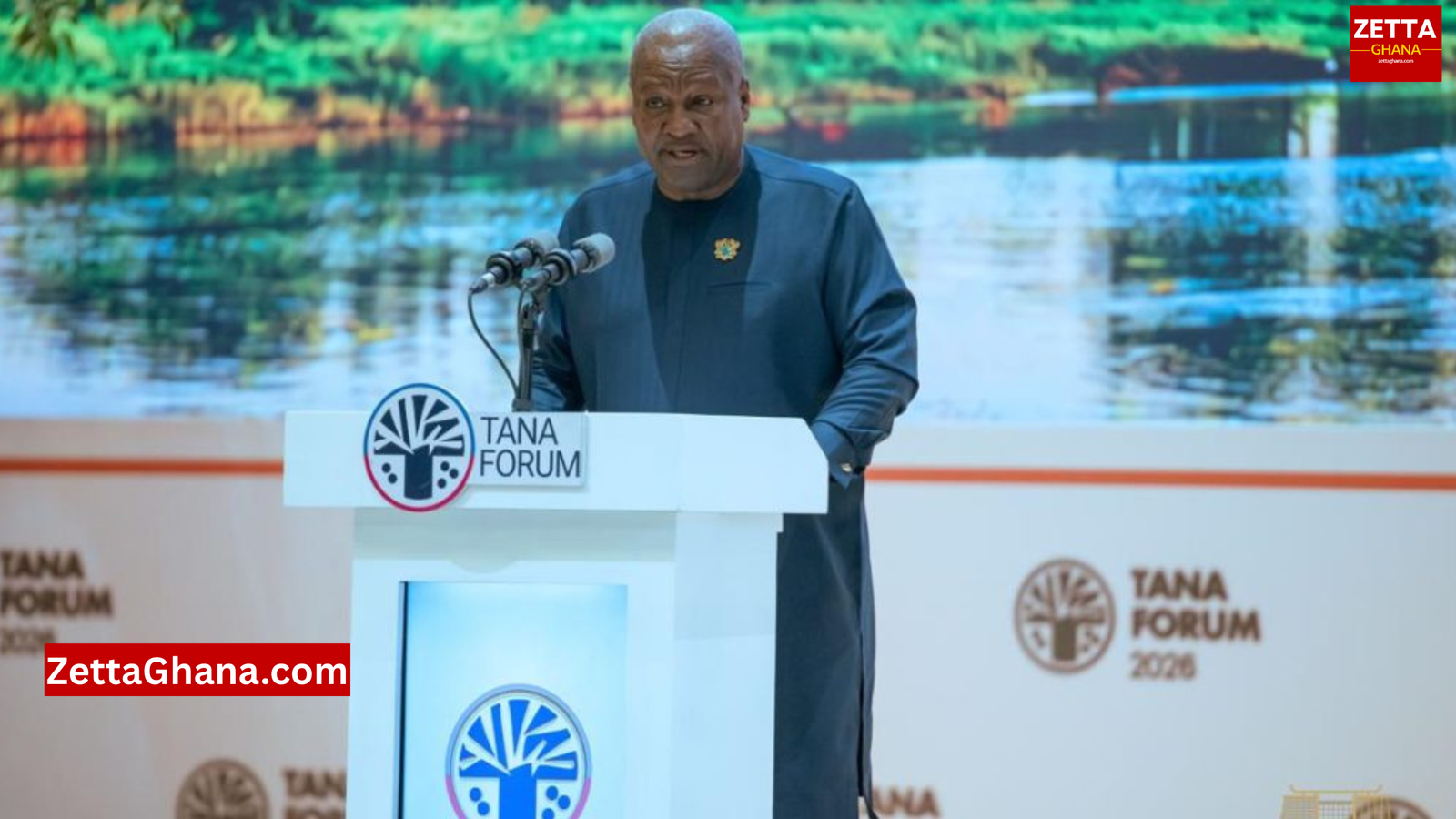
President John Dramani Mahama has warned that foreign powers are seeking influence and access to Africa’s natural resources, urging African leaders to unite to protect the continent’s political and security interests.
Speaking at the Tana High-Level Forum on Security in Africa in Bahir Dar, Ethiopia, on Saturday, October 24, the President said competition for natural resources, weak governance and external interference were contributing to conflicts across the continent.
He cited the ongoing conflicts in Sudan and the Democratic Republic of Congo (DRC), where fighting is linked partly to competition for gold and strategic minerals, including coltan and cobalt.
“External powers, from the East, the West, and the Gulf, are actively seeking leverage, access, and client states on our soil,” he said.
Mahama warned that Africa must take greater control of its own affairs rather than allow foreign interests to shape its future.
“Let me be clear: Africa is not an empty chessboard for foreign powers to play their games. We are not spectators. But unless we consciously decide to take up the pen and write our own script, someone else will write it for us, and we will not like how the story ends,” he added.
The President also identified governance challenges in Somalia, the exclusion of young people in Mozambique’s gas-rich Cabo Delgado region and divisions between the Economic Community of West African States (ECOWAS) and the Alliance of Sahel States as threats to regional stability.
He further raised concerns about the growing use of commercially available drones by armed groups, warning that the technology was making conflicts increasingly deadly.
“Armed groups and non-state actors have mastered the commercial drone—cheap, accessible, and deadly. In Sudan alone, these low-cost flying weapons accounted for the vast majority of civilian casualties early this year,” he said.
Mahama called on African leaders to strengthen cooperation, take greater responsibility for the continent’s natural resources and determine their own security priorities.
He cautioned that without a coordinated response, Africa would remain vulnerable to external interests influencing its political and security future.