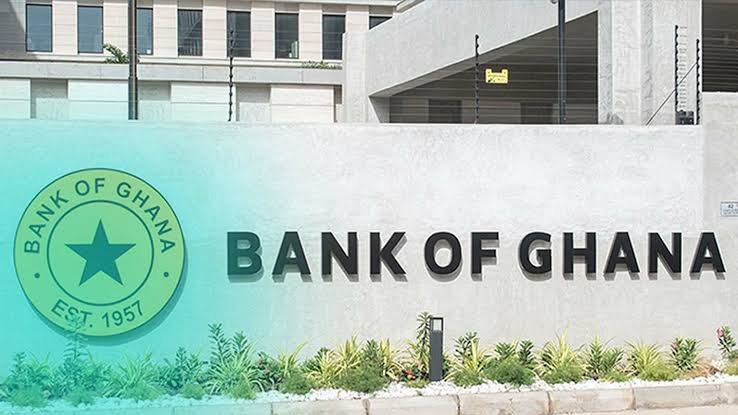
The Bank of Ghana (BoG) is developing a new directive to guide the use of artificial intelligence (AI) across the financial sector, seeking to encourage technological innovation while strengthening safeguards against emerging risks.
Governor of the Bank of Ghana, Dr Johnson Pandit Asiama, announced the initiative during the launch of Ghana in Numbers 2025, a publication by the Ghana Statistical Service, in Accra.
He said AI could improve credit assessments, fraud detection, customer service, risk management and operational efficiency across financial institutions. However, he cautioned that the technology also presents challenges involving data quality, model reliability, cybersecurity and consumer protection.
“We want to promote innovation but at the same time address the emerging risks that can evolve from this,” Dr Asiama said.
The proposed directive forms part of the central bank’s broader efforts to strengthen oversight as digital technologies increasingly shape financial services. The framework is expected to support responsible adoption of AI while improving governance and accountability in its application.
Dr Asiama also disclosed that the Bank was building its analytical capacity through the establishment of a Data Analytics and Artificial Intelligence Department. The unit is expected to support policy analysis and improve institutional decision-making.
He called for a dedicated electronic portal through which researchers, policymakers, academics and businesses could access the data underpinning Ghana in Numbers in machine-readable formats.
According to the Governor, accurate and timely economic statistics are essential for assessing inflation, exchange-rate movements, credit conditions and broader economic trends.
He also highlighted improvements in lending conditions, saying the average lending rate had declined from 30.25 per cent in December 2024 to approximately 15.7 per cent in September 2026. Real private-sector credit growth, he added, reached 26.4 per cent at the end of September 2026.
Dr Asiama stressed that responsible innovation, reliable data and stronger risk management would be essential to building a resilient financial sector.