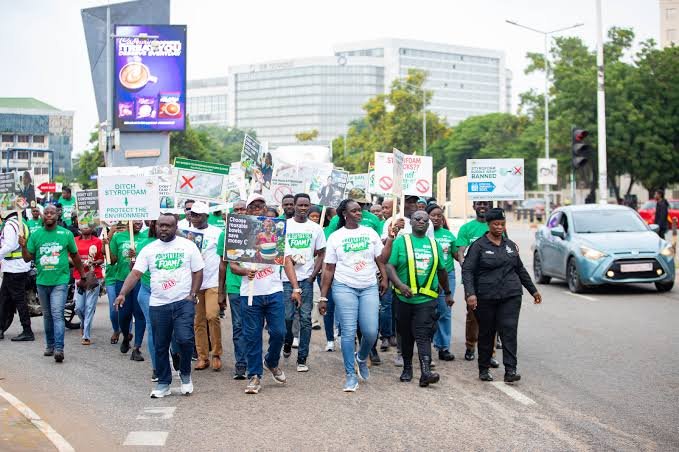
The Environmental Protection Authority (EPA) is intensifying public education on the impending ban on polystyrene foam products, commonly known as Styrofoam, as the January 1, 2027, implementation deadline approaches.
The week-long campaign, scheduled for October 26 to November 1, will cover the Northern, Upper East, Upper West, Savannah and North East regions. It aims to prepare consumers, manufacturers, distributors and other stakeholders for the transition to alternative packaging materials.
The initiative forms part of a nationwide awareness programme organised across three zones, with earlier campaigns held in Accra and Kumasi. The northern phase will culminate in a major stakeholder event in Tamale on October 29.
EPA Chief Executive Officer Professor Nana Ama Browne Klutse is leading the delegation, which will hold community engagements in areas including Bolgatanga, Nalerigu, Damongo and Wa.
The Tamale event will feature an environmental quiz involving five senior high schools, alongside a debate between the University for Development Studies and Bagabaga College of Education. The activities are intended to increase awareness of the environmental and health concerns associated with polystyrene foam products while encouraging the adoption of sustainable alternatives.
Both tertiary institutions are also expected to showcase alternative products they have developed to help address potential supply gaps following the ban.
Professor Klutse said the campaign was designed to give businesses and consumers sufficient time to prepare for the restrictions.
“No one should have the excuse that they were not aware of this ban. There will be no excuses by January 2027,” she said, reaffirming the EPA’s commitment to enforcing the directive.
Public awareness floats, media engagements and stakeholder consultations will also take place across the five regions.
The ban is part of Ghana’s efforts to reduce plastic pollution and improve environmental sanitation. The EPA has urged businesses and consumers to begin switching to reusable, recyclable and environmentally sustainable alternatives before enforcement begins.