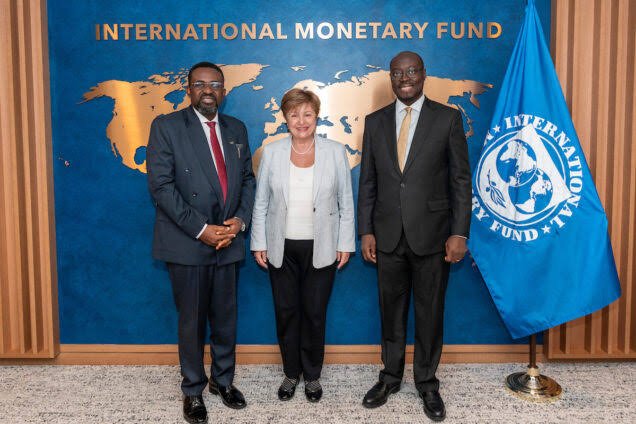
The International Monetary Fund (IMF) has reached a staff-level agreement with Ghana following the first review of the country’s 36-month Policy Coordination Instrument (PCI), signalling progress in the government’s economic reform programme.
The agreement follows discussions between an IMF delegation led by Mission Chief Ruben Atoyan and Ghanaian authorities during a visit to Accra from October 22 to November 4, 2026.
However, the deal remains subject to approval by IMF Management and the Fund’s Executive Board.
In its end-of-mission statement, the IMF described Ghana’s economic performance as resilient, highlighting strong growth, moderating inflation and improvements in the country’s fiscal position.
The Fund reported that Ghana’s economy expanded by 6.2 per cent year-on-year in the first half of 2026, while full-year growth is projected at 5.7 per cent. Inflation also declined to 5.5 per cent in October, below the Bank of Ghana’s medium-term target range of 6 to 10 per cent.
Despite these gains, the IMF identified pressure on foreign exchange reserves as a major concern. It said recent declines had prompted corrective measures, including transferring foreign exchange intermediation from the Bank of Ghana to GoldBod and increasing gold sale requirements for large-scale mining companies.
The Fund also noted that Ghana’s 2027 Budget targets a primary surplus of 0.5 per cent of GDP, creating room for priority investments in infrastructure and job creation.
It welcomed progress on several structural reforms but pointed to outstanding commitments, including improvements to tax administration and the delayed publication of the audit of the Electricity Company of Ghana’s collection accounts.
The IMF stressed that rebuilding reserves, maintaining fiscal discipline and sustaining reforms would be essential to protecting Ghana’s economic gains.