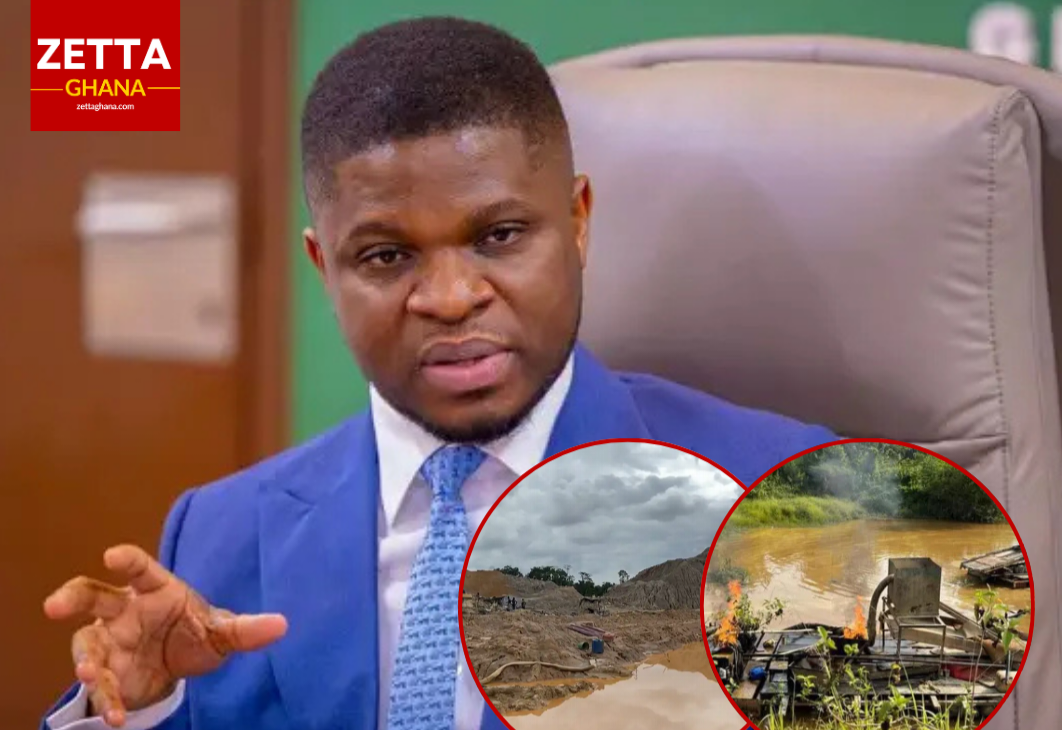
A viral video of Ghana Gold Board (GoldBod) Chief Executive Officer Sammy Gyamfi making comments about mining without a licence has sparked debate over mining regulations and the country's fight against illegal mining.
In the video, Mr Gyamfi states that mining can take place anywhere in Ghana, with or without a licence, provided the area is not within a forest reserve, too close to a water body, or near a roadside.
His comments have raised questions about the legal requirements governing mining activities in Ghana, particularly at a time when the country continues to grapple with the environmental consequences of illegal mining, popularly known as galamsey.
Although the exact location and occasion of the remarks remain unclear, the video has drawn attention to the distinction between areas where mining may be restricted and the legal authorisation required to undertake mining activities.
Mining Without a Licence?
The most striking aspect of Mr Gyamfi's comments is the suggestion that mining could take place without a licence, provided certain geographical restrictions are observed.
However, Ghana's mining laws do not make the absence of a forest reserve, water body or roadside sufficient grounds for conducting mining operations without the required authorisation.
Under Ghana's Minerals and Mining Act, 2006 (Act 703), mineral rights and the applicable authorisation requirements are central to the lawful exploration and exploitation of minerals.
Consequently, the legality of a mining operation cannot be determined solely by its distance from a water body or whether it is situated outside a forest reserve.
The distinction is particularly important because mining activities can have serious environmental and public health consequences, even when they occur outside protected areas.
Implications for Ghana's Fight Against Galamsey
Illegal mining remains a major environmental concern in Ghana, with successive governments facing pressure to protect water bodies, preserve forest reserves and enforce the country's mining laws.
The fight against galamsey has also generated public debate over the regulation of small-scale mining, access to mining licences and the need to create opportunities for lawful mining activities.
Against this backdrop, Mr Gyamfi's comments have brought renewed attention to the question of whether the public fully understands the legal conditions under which mining may be undertaken.
For many Ghanaians concerned about illegal mining, clarity on licensing requirements is essential to ensuring that statements about mining regulations are not misunderstood as permission to operate outside the law.
The Need for Clarity
The viral video has placed the substance of Mr Gyamfi's comments at the centre of public discussion.
While the precise venue and circumstances under which he made the remarks have not been established, the statement raises questions about how mining laws and licensing requirements should be communicated to the public.
As Chief Executive Officer of GoldBod, Mr Gyamfi occupies an important position in Ghana's gold sector, where the formalisation of mining activities and the promotion of responsible gold production remain significant policy concerns.
A clear explanation of the context of his remarks would help the public understand whether he was referring to a specific category of mining activity or making a broader statement about mining regulations.
For now, the debate centres on a fundamental issue: can mining be considered lawful simply because it takes place outside a forest reserve, away from a water body and not near a roadside
Ghana's mining laws make clear that the answer also depends on the applicable licensing and authorisation requirements.