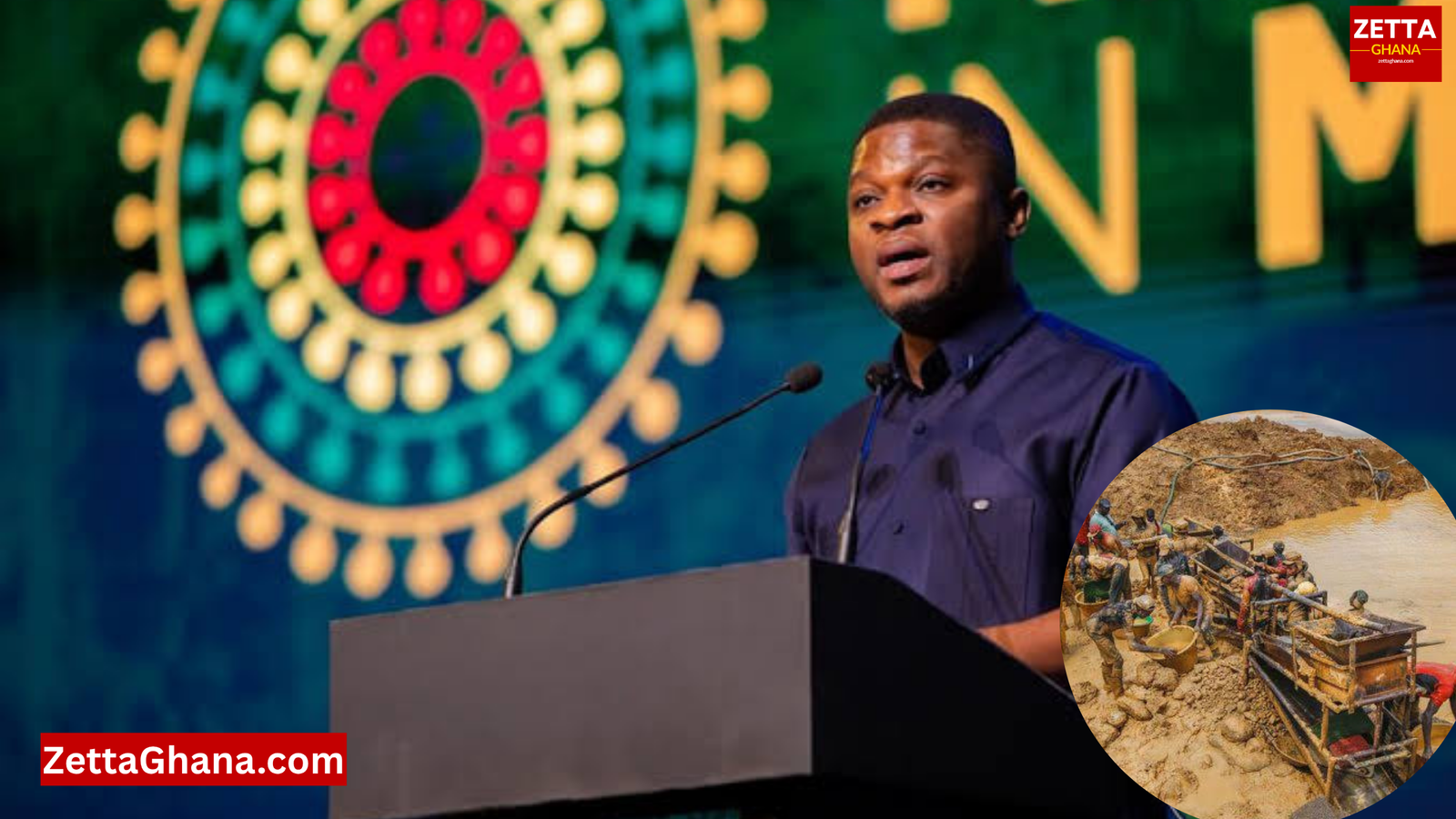
Ghana Gold Board (GoldBod) Chief Executive Officer Sammy Gyamfi has defended his comments on unlicensed small-scale mining, insisting that miners operating outside forest reserves, water bodies, and other dangerous locations should be considered for formalisation rather than automatically pursued with soldiers.
His clarification follows public debate over a viral video from the recently concluded Mining in Motion Summit, in which he appeared to suggest that mining without a licence could take place in certain areas of the country.
In a statement, Gyamfi said the circulating clip had been cut to exclude important parts of his explanation of the government’s plans to support responsible small-scale mining.
He identified three categories of unlicensed mining operations he said could neither be tolerated nor reformed: activities that affect water bodies, mining in forest reserves, and operations in dangerous locations within communities, including roadsides and school lands.
However, he argued that unlicensed artisanal and small-scale miners operating outside those areas could qualify for formalisation under the government’s Responsible Cooperative Mining and Skills Development Programme (rCOMSDEP).
“I maintain that formalizing such unlicensed ASMs is a better approach than chasing them with soldiers,” he said.
According to Gyamfi, the programme is designed to help eligible miners obtain the necessary legal documentation, permits, certifications and training to operate responsibly.
He described formalisation and traceability as a new approach to making small-scale mining more sustainable, arguing that support for miners whose activities do not harm water bodies, forest reserves or communities could help bring them into the formal mining economy.
At the summit, Gyamfi said mining regulations should combine firm enforcement with practical measures that create opportunities for miners to comply.
“Reform will endure only when compliance becomes a pathway to opportunity rather than hardships,” he said, adding that regulation should not only police miners but also build their capacity and create opportunities for young Africans.
He also argued that properly organised small-scale mining could improve gold recovery, reduce waste, strengthen safety and create jobs while limiting environmental damage.
Gyamfi further announced plans for GoldBod to introduce an Artisanal and Small-scale Mining Formalisation and Financing Support Programme (FFSP) in 2027, in collaboration with the Ministry of Lands and Natural Resources, the University of Mines and Technology, and Rand Refinery.
The initiative, he said, would seek to increase gold production, mineral revenue, and job creation while reducing operational costs and environmental risks.