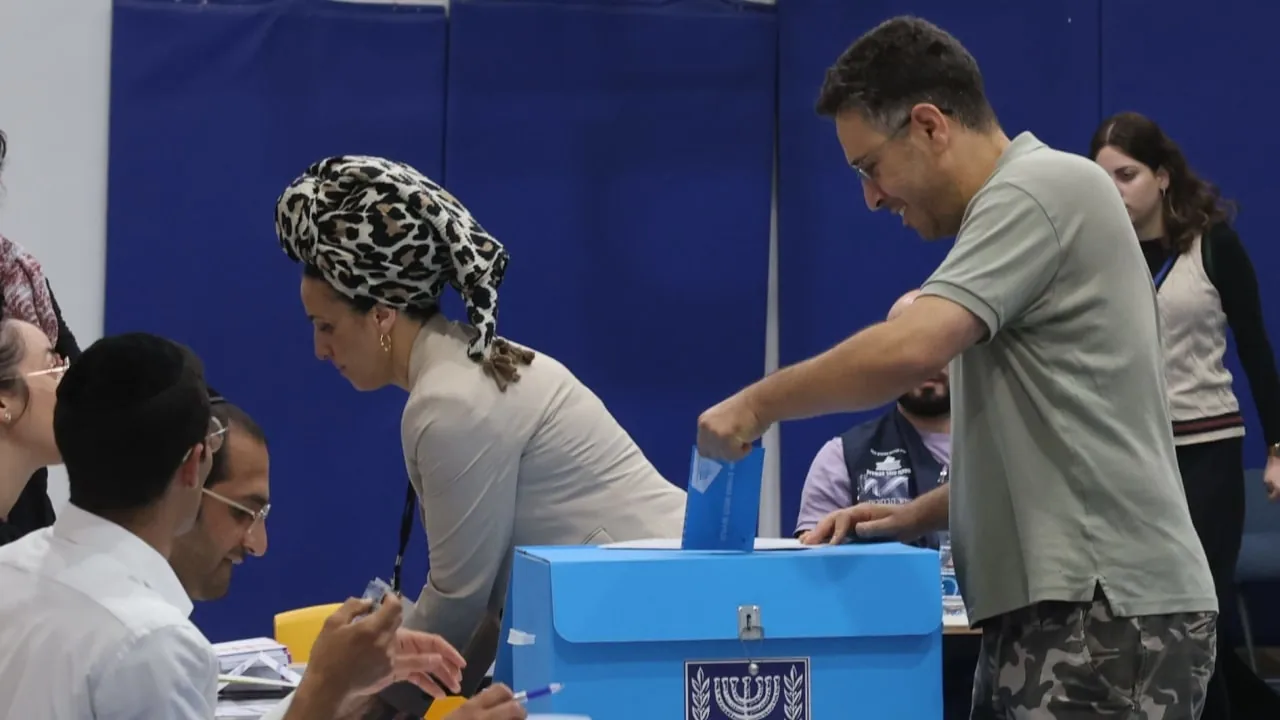
Israeli voters are casting their ballots in a closely contested parliamentary election that could determine whether Prime Minister Benjamin Netanyahu retains power or former military chief Gadi Eisenkot leads a new government.
The election, scheduled for Tuesday, October 27, 2026, comes amid intense debate over national security, accountability for the October 7, 2023, Hamas-led attacks and the direction of Israel’s foreign policy.
Recent opinion polls indicate a competitive race between Netanyahu’s Likud party and Eisenkot’s newly formed Yashar party. However, projections suggest neither political bloc has a clear path to securing the 61 seats required for a majority in Israel’s 120-member parliament, the Knesset.
The October 7 attacks remain central to the campaign. Nearly 1,200 people were killed in the assault, while 251 people were taken hostage to Gaza. Opposition figures have criticised Netanyahu over the security failures preceding the attacks and called for an independent commission of inquiry.
Netanyahu has resisted calls for such an investigation, arguing that the proposed process would be biased against him. He has instead highlighted his government’s military operations across the Middle East and his relationship with United States President Donald Trump.
Eisenkot, who heads the opposition’s so-called change bloc, has made accountability and security reforms key campaign themes. The alliance brings together parties with differing political positions but a shared objective of replacing Netanyahu’s government.
Israel’s proportional representation system means that winning the most seats does not automatically guarantee the premiership. Parties must negotiate alliances and secure parliamentary support to form a government.