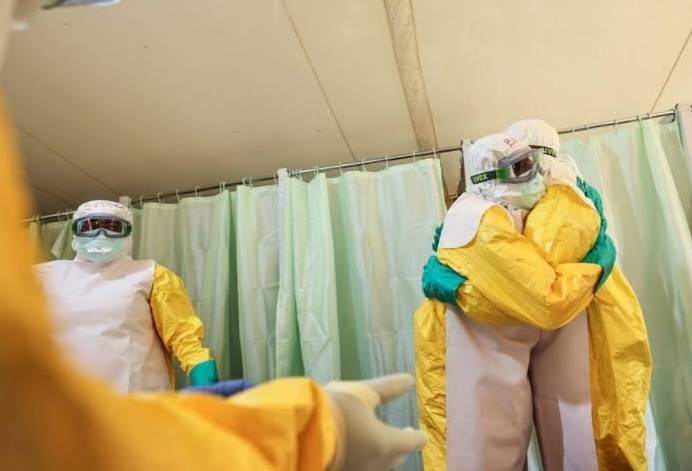
More than 5,000 people have died from an ongoing Ebola outbreak in the Democratic Republic of Congo (DR Congo), with government figures showing that infections have spread across eight of the country’s 26 provinces.
The health ministry has recorded more than 10,300 confirmed cases, with the outbreak’s case fatality rate standing at 48.6%.
The outbreak began in May and became the deadliest in the country’s history in August, according to public health officials. The United Nations describes it as the 17th Ebola outbreak recorded in DR Congo and the second largest in history.
Ituri Province, in the country’s north-east, remains the epicentre of the epidemic. However, the region’s ongoing conflict has complicated efforts to contain the virus and reach affected communities.
Beyond DR Congo, cases have also been confirmed in Kenya, Nigeria and Uganda, raising concerns about the potential for further regional transmission.
The World Health Organization’s Africa office has called for stronger measures to contain the outbreak, stressing the need to expand key control interventions, improve access to affected communities and intensify public education.
Testing and treatment efforts are ongoing, while clinical trials of vaccines are also being conducted as health authorities work to limit further infections.